
Dark Circles
Dark circles under the eyes are a common cosmetic concern for both men and women. They can make a person appear tired, aged, or unwell—even when they are not. To effectively treat dark circles, it is essential to understand their underlying causes and choose the right treatment based on the specific type.
Real Patient Results — Under-Eye Rejuvenation at Panache
Before & after under-eye treatment (fat grafting / lower eyelid surgery) by Dr. Ankit Gupta in Delhi.
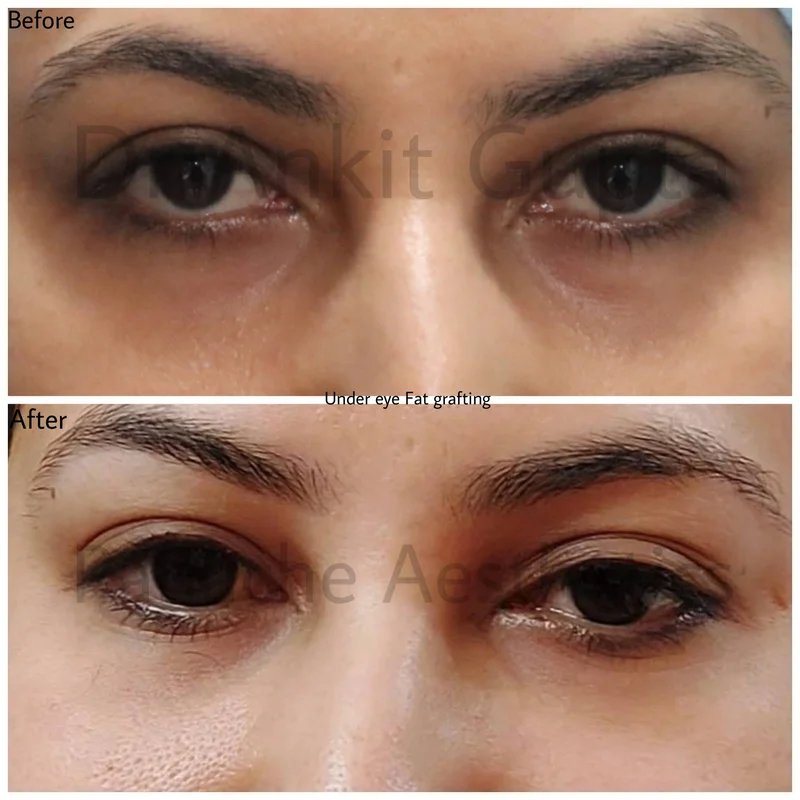
Under-Eye Fat Grafting · Panache
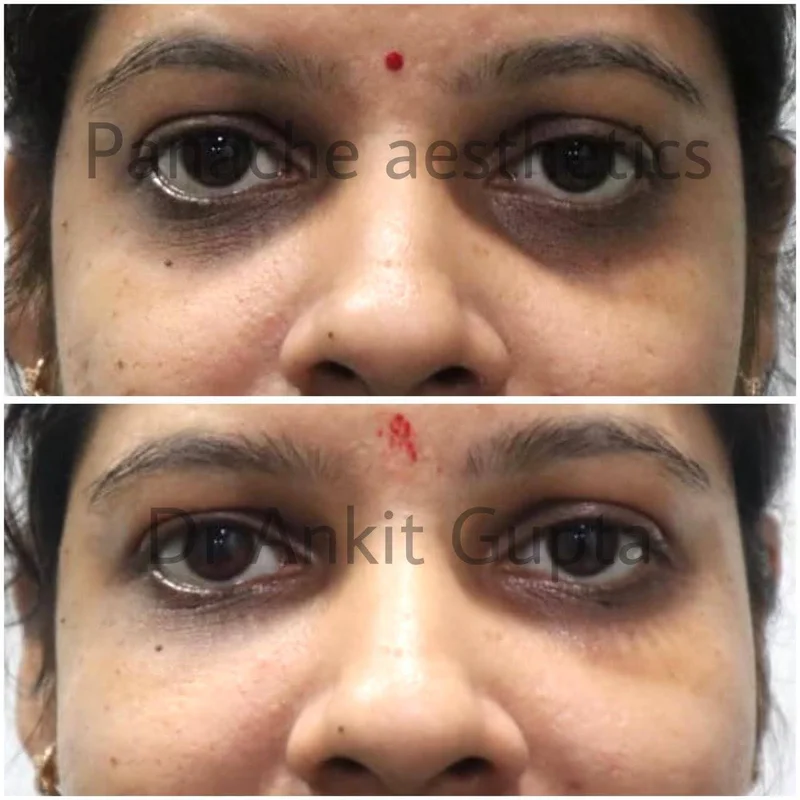
Hollow Correction · Delhi
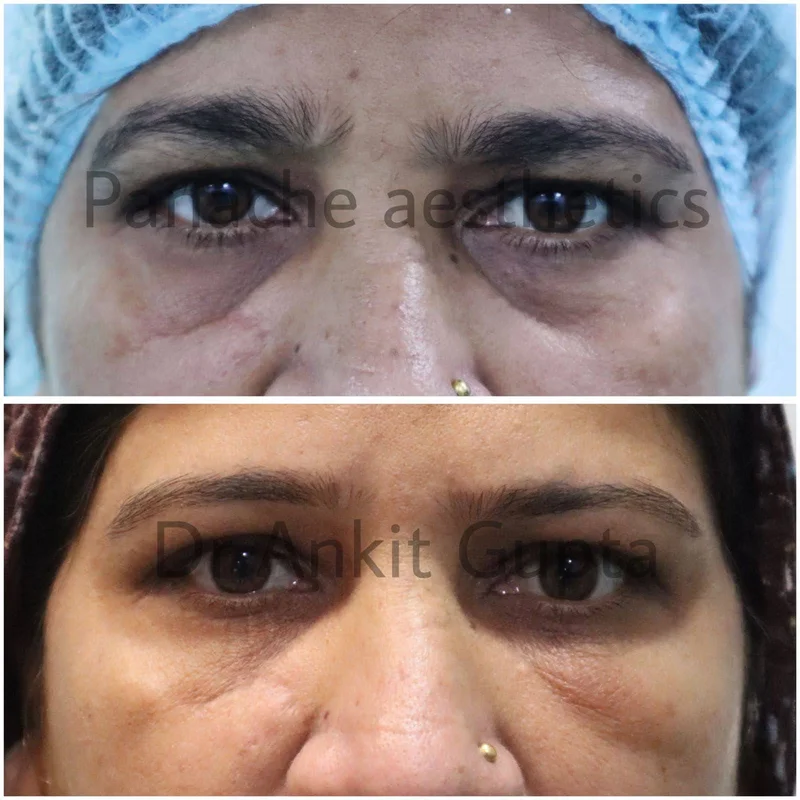
Tear Trough Correction · Panache
"Dr. Ankit Gupta is highly skilled and professional. I'm very happy with the results and the care I received."— Niru Yadav, Google Review ★★★★★
Cost depends on the type of dark circles and whether surgery, fat grafting, or fillers are used. See the full, transparent pricing on our main eyelid surgery page.
View Under-Eye Surgery Cost & Details →Types of Dark Circles and Their Causes
Dark circles can be categorized into different types based on their appearance and cause:
1. Pigmented Dark Circles (Brown)
These are caused by an excess production of melanin, leading to hyperpigmentation under the eyes. They are more common in individuals with darker skin tones. Factors such as genetics, sun exposure, allergies, and frequent eye rubbing can worsen this type.
2. Vascular Dark Circles (Blue or Purple)
These occur due to visible blood vessels or thinning of the under-eye skin, which makes the blood underneath more noticeable. They are common among fair-skinned individuals and can be triggered by fatigue, lack of sleep, aging, or stress.
3. Structural or Hollow Dark Circles (Shadow Effect)
This type results from volume loss under the eyes, often referred to as a tear trough deformity. It creates a hollow appearance and shadowing. It is commonly seen in older individuals or those with naturally thinner facial fat. Contributing factors include genetics, aging, and weight loss.
4. Mixed Type
Some individuals may have a combination of pigmentation, vascular visibility, and structural hollowness, requiring a multi-modal treatment approach.
Treatment Options for Dark Circles
1. Topical Treatments
Topical creams containing retinoids, vitamin C, kojic acid, or niacinamide can help reduce pigmentation and brighten the under-eye area. These are most effective for mild pigmented dark circles.
2. Chemical Peels & Laser Therapy
These treatments help in reducing pigmentation and improving skin texture by stimulating collagen. They are beneficial for both pigmented and vascular types of dark circles.
3. Fillers (Hyaluronic Acid)
Hyaluronic acid fillers can be injected into the under-eye hollows to restore volume and reduce the shadow effect. They are ideal for structural or hollow dark circles.
4. Growth Factor Therapy
Growth factor therapy uses concentrated growth factors from the patient’s own blood to rejuvenate the skin and improve texture. It is suitable for vascular and mild structural dark circles.
Know More About Blepharoplasty for Dark Circles →
Surgical Treatments: When to Consider Blepharoplasty or Fat Grafting?
✂️ Lower Eyelid Blepharoplasty
This surgical procedure is recommended for individuals with under-eye bags or skin laxity contributing to dark circles. Blepharoplasty involves removing or repositioning the herniated fat and tightening the loose skin. It involves removing or repositioning the herniated fat and tightening the loose skin. It works best in cases where fat bulges cast shadows under the eyes.
💉 Fat Grafting (Fat Transfer)
Fat grafting involves harvesting fat from another part of the body and injecting it into the under-eye area to fill hollows and restore volume. It is best suited for patients with tear trough deformity and structural volume loss. Fat grafting can also be combined with blepharoplasty for comprehensive correction.
What Doesn’t Respond Well to Surgery?
Pigmented dark circles caused by melanin deposition do not respond well to surgical options like blepharoplasty or fat grafting. These are better managed with topical treatments, chemical peels, or lasers. Vascular dark circles might also persist after surgery, though they can be improved with growth factor therapy or skin boosters.
Explore Medifacials for Skin Rejuvenation →
Dr Ankit Gupta: Best Cosmetic Plastic Surgeon in Delhi
MBBS, MS, M.Ch (Plastic Surgery)
Dr Ankit Gupta, the founder and owner of Panache, is a senior Plastic Surgeon with many years of experience. He is one of the Best Cosmetic Plastic Surgeons in Delhi.


