
The eyes are the first feature people notice — and often the first to show age, fatigue, and genetics. Sagging upper lids, puffy under-eye bags, and hollow tear troughs are all structural changes that no cream, filler, or sleep schedule can fully reverse. Blepharoplasty (eyelid surgery) corrects these at the root.
This guide covers everything patients in Delhi ask before their first consultation — what the procedure involves, who it’s right for, what results look like, and how to choose the right surgeon.
Explore Blepharoplasty at Panache →
Real Patient Results — Blepharoplasty at Panache Aesthetics
Before & after eyelid surgery results by Dr. Ankit Gupta at Panache Aesthetics, Pitampura.
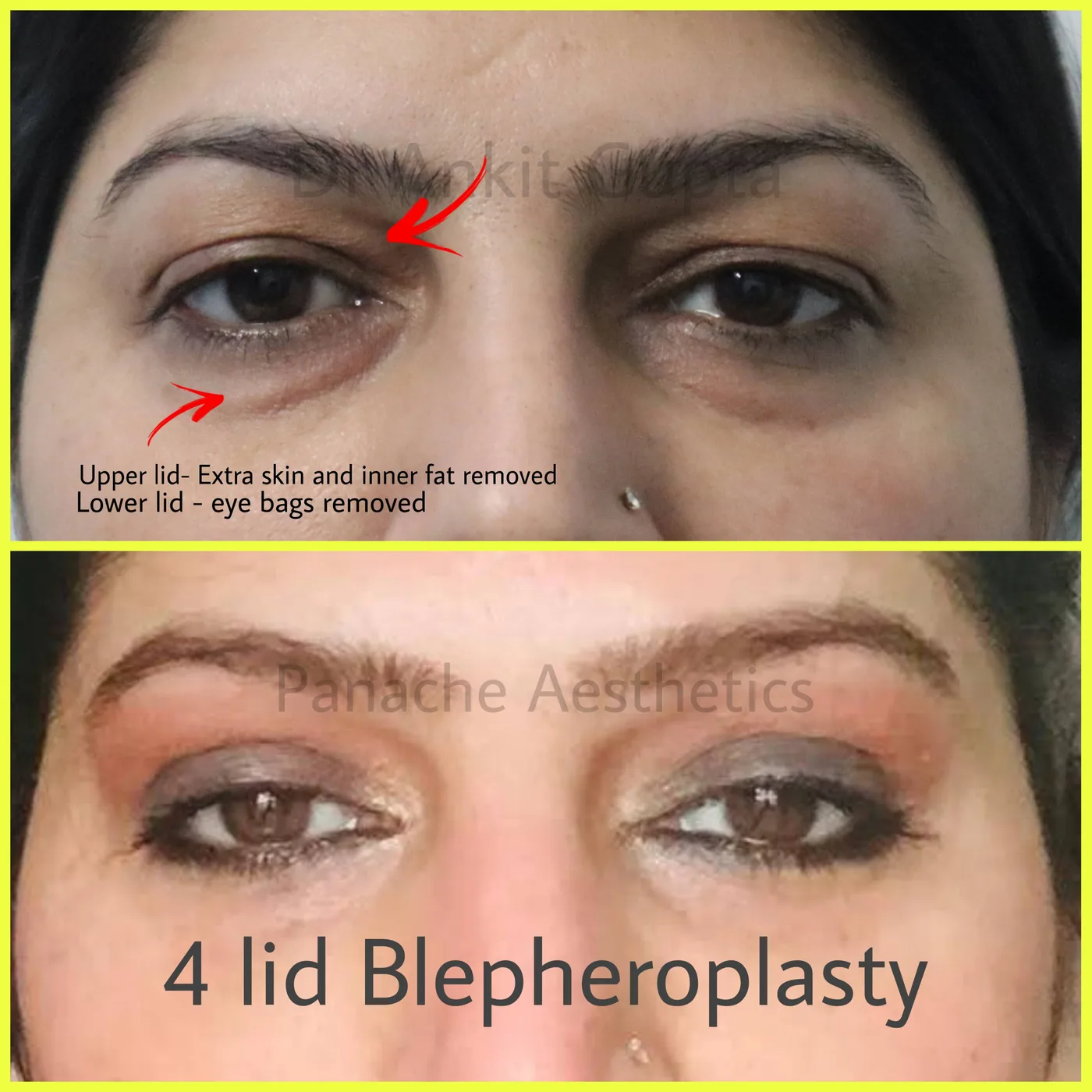
Eyelid Surgery · Delhi
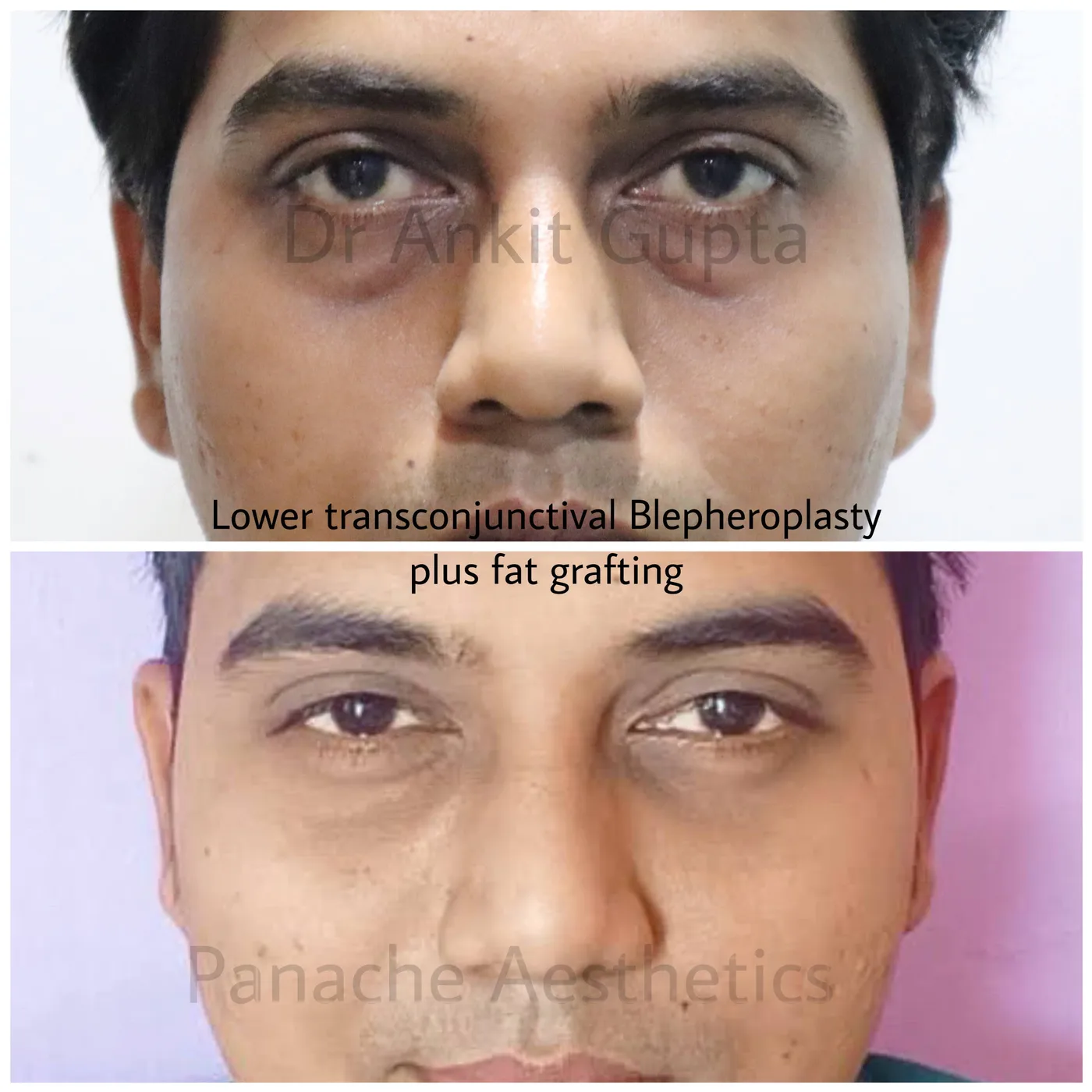
Open Eyes · Panache
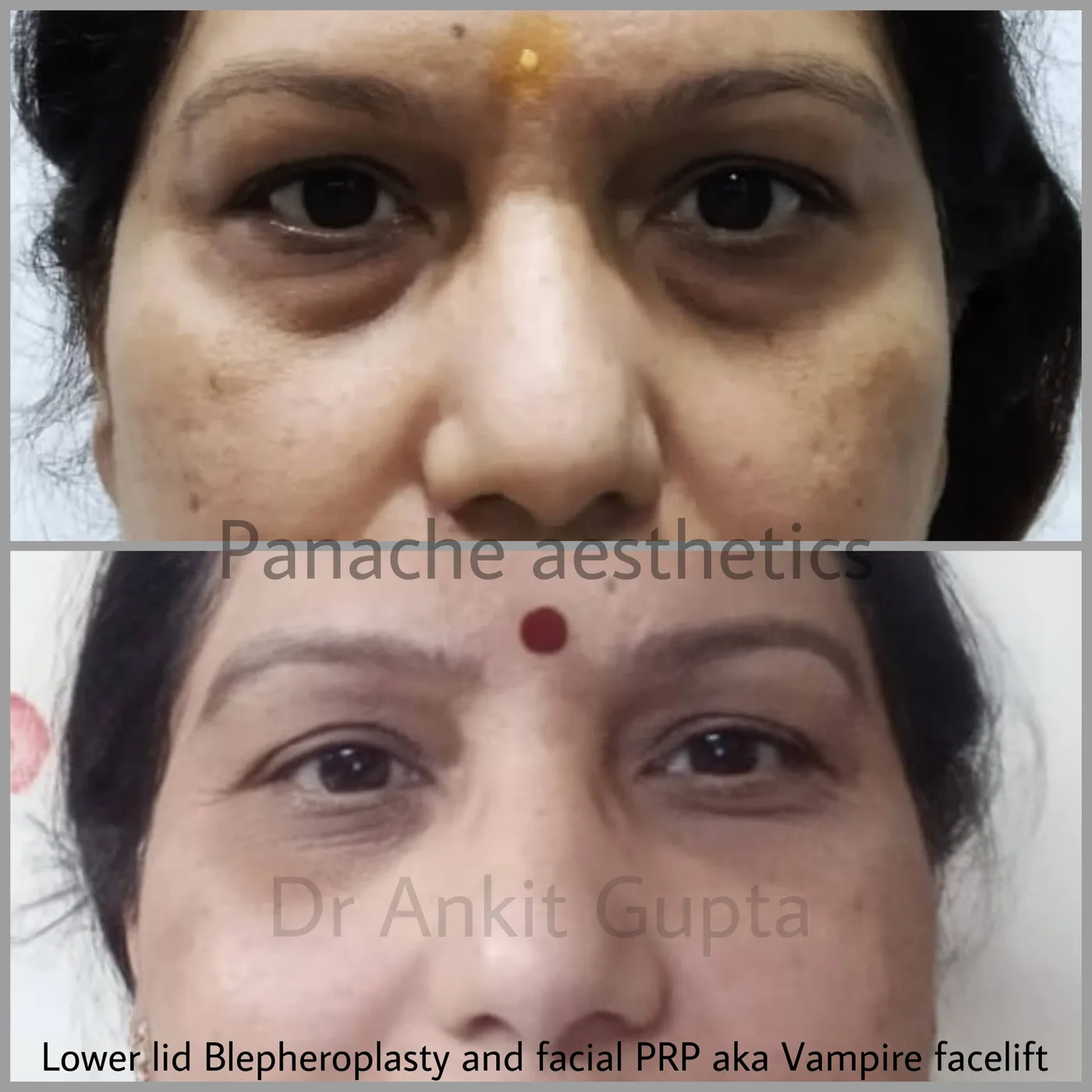
Natural Result · Delhi
"Dr. Ankit Gupta is highly skilled and professional. I'm very happy with the results and the care I received."— Niru Yadav, Google Review ★★★★★
Cost varies by which lids are treated (upper, lower, or four-lid) and the technique. See the full, transparent pricing on our main blepharoplasty page.
View Blepharoplasty Cost & Details →What Is Blepharoplasty?
Blepharoplasty is a surgical procedure that removes or repositions excess skin, fat, and muscle from the upper and lower eyelids. Depending on which lids are addressed, it can:
- Remove hooding and excess skin from the upper lids
- Eliminate under-eye fat bags (puffiness caused by prolapsed orbital fat)
- Tighten loose lower-lid skin
- Reposition volume to fill the tear trough
- Restore a more open, rested, youthful appearance
It does not change the shape, colour, or character of your eyes. The goal is always to restore — not transform.
Types of Blepharoplasty
Upper Eyelid Blepharoplasty
The most common eyelid procedure. Excess skin and sometimes fat are removed through an incision placed precisely in the natural upper eyelid crease — invisible when healed. It corrects drooping, hooded, or heavy upper lids and in some cases improves peripheral vision when skin overhangs the lash line.
Lower Eyelid Blepharoplasty
Addresses under-eye bags caused by fat prolapsing forward through a weakened orbital septum. At Panache, this is performed via the trans-conjunctival approach — the incision is made inside the lower eyelid, leaving absolutely no external scar. Fat is removed or repositioned to produce a smooth, flat under-eye contour.
Four-Lid (Combined) Blepharoplasty
Both upper and lower lids operated in a single session. The most comprehensive result — total eye rejuvenation, single recovery period. Very commonly done at Panache.
Asian Eyelid Surgery (Double Eyelid Surgery)
Creates a natural upper eyelid crease in patients who do not naturally have one. The technique is carefully designed to preserve ethnic identity — creating a defined lid fold that looks anatomically appropriate, not Westernised.
Before & After Blepharoplasty Results — Panache, Delhi
Real patient outcomes by Dr. Ankit Gupta.
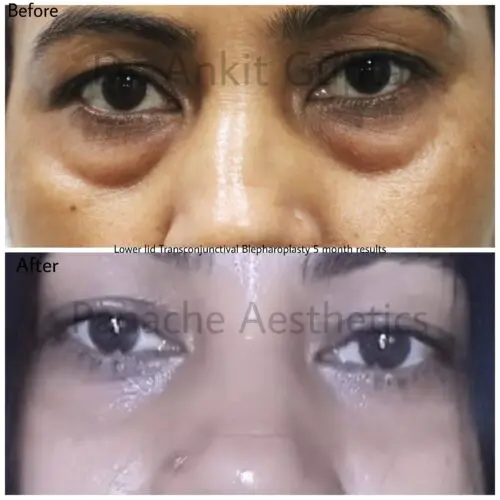
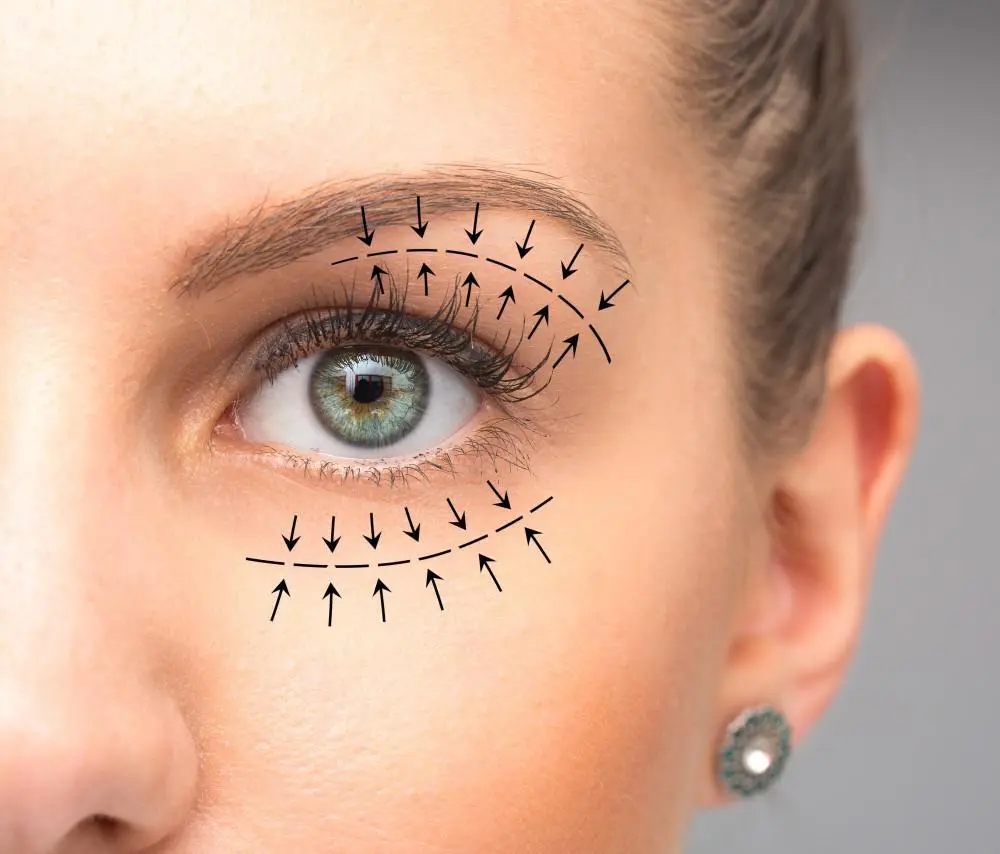
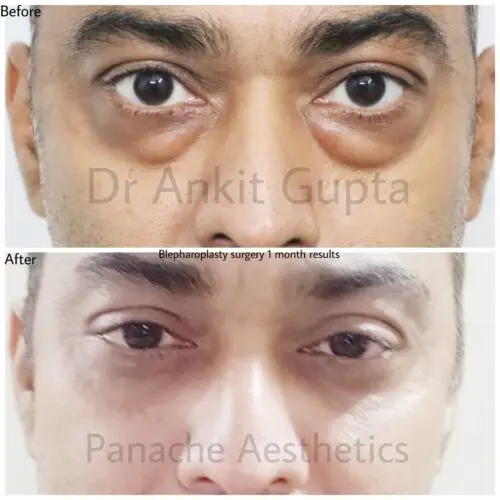
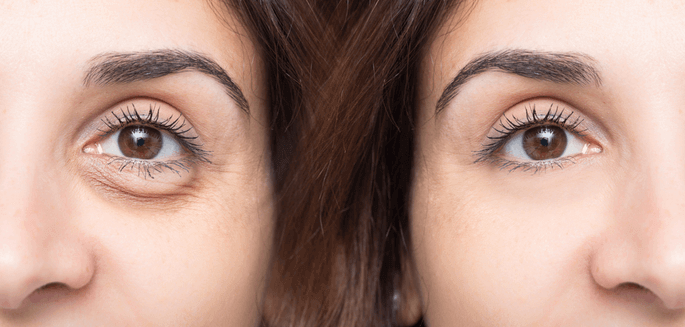
Results look natural — patients report that colleagues and friends notice they look well-rested, not operated.
View Full Before & After Gallery →
The Trifecta Blepharoplasty — Dr. Ankit’s Signature Approach
Standard blepharoplasty removes excess tissue. Dr. Ankit’s Trifecta approach goes further — treating all three components of eyelid ageing in one session:
1. Tissue Correction — Excess skin removed from upper lids. Fat removed or repositioned from lower lids via trans-conjunctival approach (no visible scar).
2. Volume Restoration — Micro-fat grafting to the tear trough and upper cheek area replenishes lost volume, preventing the hollowed-out appearance that standard lower blepharoplasty can create.
3. Skin Resurfacing — Fractional laser tightens fine lines around the eyes and improves skin texture, adding a further layer of rejuvenation that lasts.
The result: no bags, no hollowness, no lines — a face that looks rested and fresh rather than “done.”
Who Is a Good Candidate?
Blepharoplasty is right for you if:
- Your upper eyelids droop or hood, making eyes appear smaller or tired
- You have under-eye bags that are present regardless of sleep or hydration
- Makeup creases on the upper lids or sits in the under-eye area
- The appearance started in your 30s and has worsened — possibly genetic
- You want a natural improvement, not a dramatic change
- You are in good general health, a non-smoker, and have realistic expectations
There is no ideal age — patients in their late 20s with genetic under-eye bags are treated as commonly as patients in their 50s with age-related changes.
Recovery — What to Expect
| Timeline | What Happens |
|---|---|
| Day 1–3 | Swelling and bruising at peak. Rest at home, head elevated. Cold compress. |
| Days 4–7 | Bruising begins to fade. Most desk-work patients return to work. |
| Week 2 | Swelling mostly resolved. Looking completely normal in social settings. |
| Week 4 | Incision lines softening. Full activity resumed. |
| Month 3 | Final contour visible. Results are permanent. |
Upper blepharoplasty is a daycare procedure under local anaesthesia. Lower blepharoplasty uses sedation or general anaesthesia depending on scope. You go home the same day.
What Can Be Combined with Blepharoplasty?
Blepharoplasty is frequently combined with other procedures to achieve more complete facial rejuvenation:
- Fat Grafting — volume to cheeks and tear trough
- Brow Lift — lifts the brow to further open the eye
- Facelift — for complete upper and mid-face rejuvenation
- Buccal Fat Removal — for a more defined facial contour
- Fillers & Neuromodulators — for patients not ready for surgery
Choosing the Right Surgeon for Blepharoplasty in Delhi
The eyelid is the most delicate area in facial surgery. The margin for error is extremely small — asymmetry, over-correction, or scarring in the wrong position are difficult to reverse.
When choosing a surgeon:
- Verify they are a board-certified plastic surgeon (M.Ch. Plastic Surgery) — not a dermatologist, ophthalmologist, or cosmetic physician performing eyelid surgery as a side procedure
- Review their before/after gallery specifically for eyelid work — not just face or body
- Ask specifically about technique: trans-conjunctival vs external approach for lower lids
- Ask what happens if asymmetry occurs
Dr. Ankit Gupta is an M.Ch. Plastic Surgery (Gold Medallist), with eyelid surgery as one of his highest-volume specialisms. His work spans upper lid, lower lid, Asian, and combined blepharoplasty — all in one practice.
Frequently Asked Questions
Will the scar be visible? For lower blepharoplasty using the trans-conjunctival approach — no external scar at all. For upper blepharoplasty, the incision sits within the natural lid crease and is completely invisible when the eye is open. It fades to imperceptible within a few months.
How long do results last? Upper blepharoplasty results last 10–15 years. Lower blepharoplasty (fat removal) is generally considered permanent — the removed fat does not regenerate. Natural ageing continues, but the baseline is permanently improved.
Can under-eye fillers replace surgery? Fillers address the hollow shadow (tear trough) but not the fat bag (the forward protrusion). If your primary concern is puffiness rather than hollowness, surgery is the only effective solution.
Can all four eyelids be done together? Yes — and this is commonly recommended. One anaesthesia, one recovery period, comprehensive result. The total time in surgery is 2–3 hours.
What is the cost of blepharoplasty in Delhi? Cost depends on which eyelids are treated, whether fat grafting or laser is added, and the anaesthesia plan. Dr. Ankit provides a complete, transparent breakdown at consultation after examining your eyelids. There are no hidden charges.
Book a Blepharoplasty Consultation at Panache →
Also read:


